A production confirmation that reaches the ERP hours later, under the wrong revision, or not at all is worse than no confirmation. The shop floor moves on, and the discrepancy only surfaces at month-end inventory.
ManuFactoryIQ guides operators through serial, component, material, and source-location scans from one simple screen, and validates every transaction before it is allowed to reach the ERP. Output, consumption, scrap, packaging, and tooling checks are recorded at the point of production with the operator, timestamp, and reason attached.
Each engine validates shop-floor reality before it becomes an ERP record — and keeps the evidence when something goes wrong.
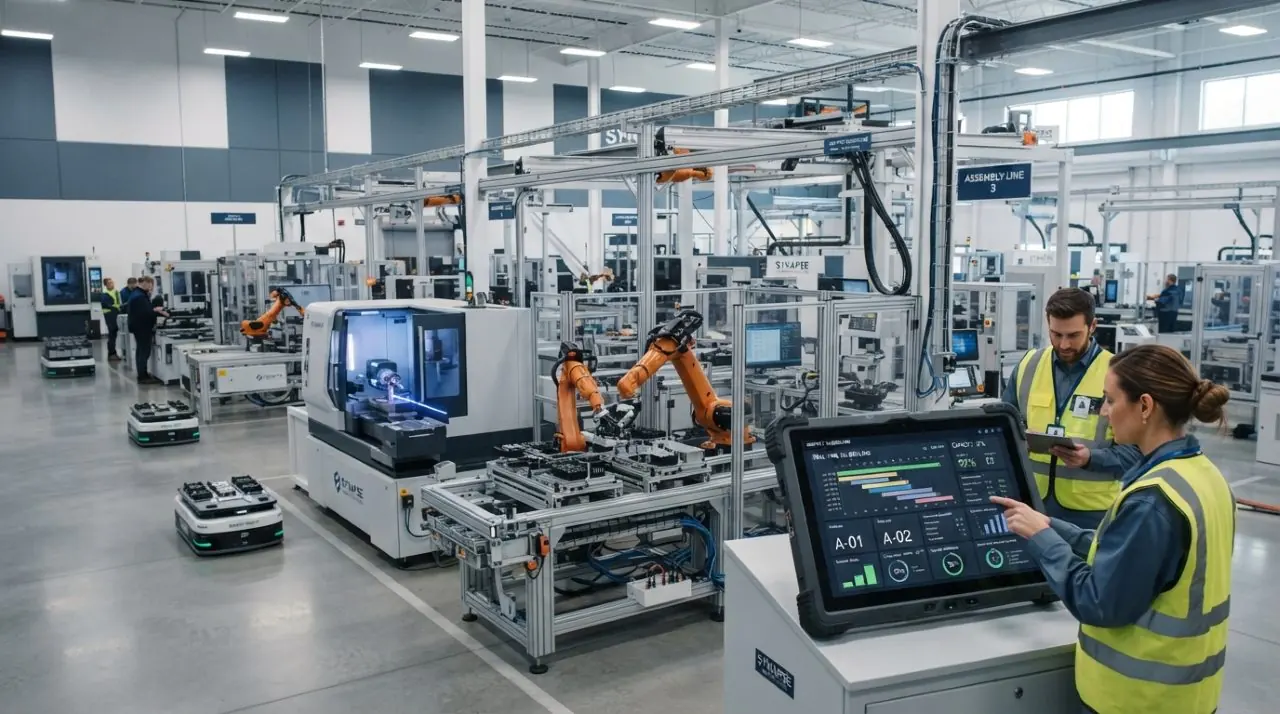
Most bad production data is not the operator’s fault. It is the result of a screen that accepts anything typed into it and only reveals the problem days later, when the ERP posting fails or inventory no longer matches.
ManuFactoryIQ guides operators through serial, component, material, and source-location scans from one simple screen. The system blocks duplicate serials, invalid material statuses, unauthorized locations, and incorrect component combinations before they reach the ERP.
Every successful or rejected action is recorded with the operator, timestamp, and reason for complete traceability. A rejection is not a dead end — it is a logged event that explains exactly which rule stopped the transaction.
Because validation happens at the scanner rather than in a nightly batch job, the operator learns about the problem while the part is still in their hand.
"Stop shop-floor errors before they ever touch the ERP ledger."
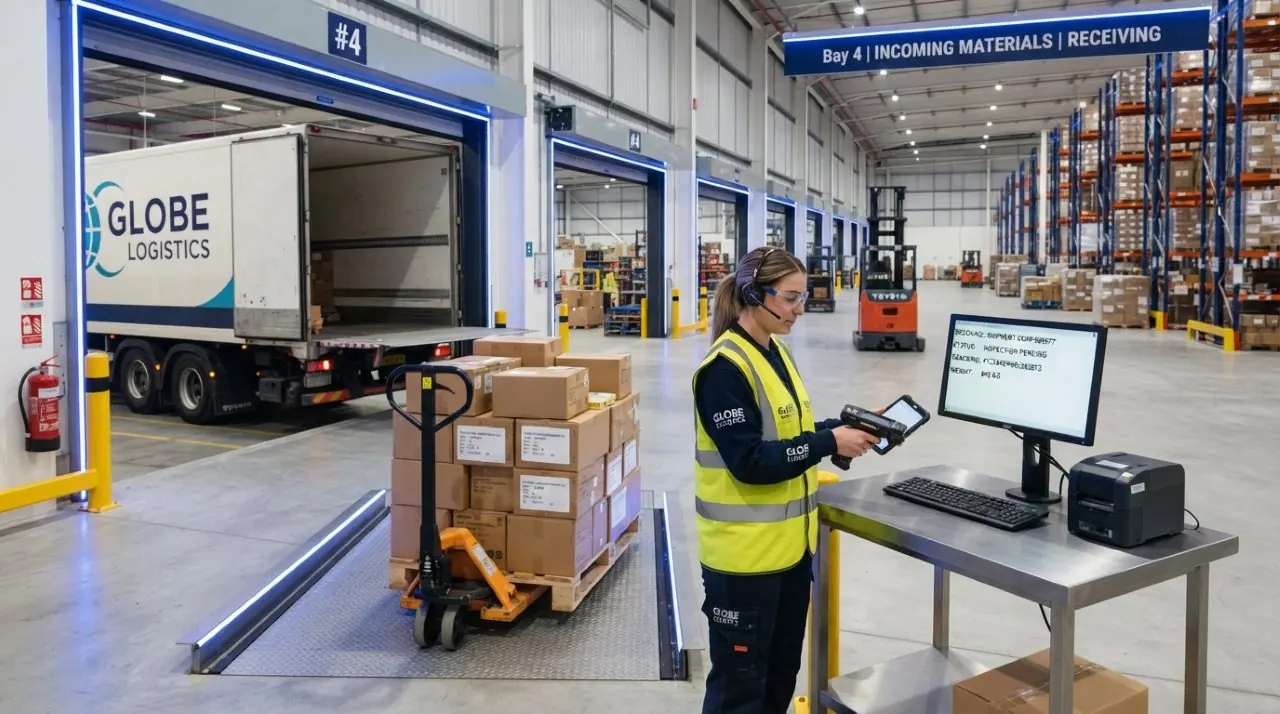
When an engineering change is released, both revisions live on the floor at the same time. Old stock is depleted while new parts are already running, and a serial scanned against the wrong revision posts incorrectly or not at all.
ManuFactoryIQ identifies the correct item and revision directly from the serial number, even when multiple revisions are open simultaneously. This prevents valid production from being assigned to the wrong revision and eliminates silent ERP posting failures.
Product-family rules can also recognize approved variants without weakening process control. An accepted alternate part is resolved automatically; an unapproved one is still stopped.
The operator is never asked to know which revision is currently open on which line. The serial itself carries that answer.
"No posting mismatches across co-existing revisions and approved variants."

Not every serial arrives with a production order attached. When it does not, the operator stops, finds a supervisor, and someone searches the ERP for an open order with remaining quantity while the line waits.
ManuFactoryIQ evaluates eligible released orders automatically and selects one with remaining quantity based on due date and configured production rules, allowing the operator to continue without manual research.
The rules are yours: earliest due date, specific line assignment, customer priority, or a combination. What the system will not do is silently guess outside them.
Every automated decision remains logged and traceable, including which orders were evaluated and why the chosen one won.
"Keep the line moving without manual order searches or dispatch delays."
Scrap reconstructed at the end of a shift is an estimate. By then nobody remembers whether the rejected parts came from the first run or the changeover, and the reason code becomes whichever one is nearest on the list.
ManuFactoryIQ records produced quantities, remaining material, defects, and reason codes directly at the point of production. Operators can continue with the existing lot or create a new one while the system validates the applicable product family and production order.
Output and material consumption are then sent to the ERP through one controlled action, so the good quantity and the material it consumed can never be posted apart from each other.
Remaining material stays attached to its lot and spool, which is what makes the next shift’s starting balance believable.
"Scrap and consumption recorded in the moment, not from end-of-shift memory."
Packaging is where quiet inventory errors are created. A serial scanned into two cartons, a box closed against the wrong order, or a finished-goods posting repeated after a browser refresh all produce stock that exists on paper but not on the rack.
ManuFactoryIQ locks the correct box or packaging lot, scans finished serials in or out, and validates every product against the selected order. The same serial cannot be packaged or posted twice.
Finished-goods output and the related material consumption are transferred to the ERP together, with a complete transaction history behind each posting.
Removing a serial from a carton is a first-class action too, recorded with its reason rather than corrected later by an inventory adjustment.
"One serial, one carton, one posting — enforced at the scanner."
Integrations fail quietly. A dropped connection, a closed browser tab, or a rejected interface message leaves production that happened on the floor but never arrived in the ERP — and nobody notices until the numbers are reconciled weeks later.
ManuFactoryIQ detects production recorded on the shop floor but never received by the ERP, whatever the cause, and shows it as an open item rather than an absence.
Expected BOM consumption is compared against actual ERP consumption, with drill-down to the component, lot, or serial level, so a variance points at a specific record instead of a total.
Failed transactions remain in a controlled retry queue. Reposting is idempotent, so a recovery cannot turn one production event into two.
"A failed posting becomes a visible queue item, never a silent loss."
Checklists fail when they are inconvenient. If finding the right form takes longer than the check itself, the form gets filled in at the end of the shift from memory, and the record becomes fiction.
ManuFactoryIQ lets operators scan a line or machine QR code to open the correct tooling and shift checklist instantly. No navigation, no searching for the right machine in a list.
Factory shifts are determined using the plant’s server time, so a device with a wrong clock or a different time zone cannot assign work to the wrong shift.
Photos, tool positions, completion history, and operator information stay connected to each record, and the frictionless interface supports shared shop-floor devices without sacrificing traceability.
"Scan the machine, get the right checklist, keep the traceability."
A report that cannot be traced back to the transactions behind it becomes a topic of debate rather than a basis for decisions. The first question in every production meeting is where the number came from.
ManuFactoryIQ reports daily production, inventory, transactions, outputs, material consumption, and reconciliation status from one environment. Every summary stays connected to the underlying production records.
Reports are filtered by process, product, order, lot, date, or shift, and exported to CSV or Excel when the numbers need to travel to finance or a customer.
The same data serves the shift supervisor looking at the last hour and the plant director looking at the month, because both are reading the same transaction log.
"From the plant summary down to a single serial scan, without leaving the report."
Enterprise systems were built for accounting ledgers, not for millisecond decisions at a workstation. ManuFactoryIQ bridges that gap with non-invasive, bidirectional pipelines to SAP, Microsoft Dynamics 365, Oracle, and NetSuite — plus the machines themselves.


See how ManuFactoryIQ validates shop-floor scanning, posts to your ERP in real time, and keeps every serial accounted for.