An auditor asks one question and three departments stop working. Binders are pulled, spreadsheets are cross-checked, and somebody drives to an off-site archive for a travel packet signed eleven months ago. The evidence exists — it is just scattered across paper, e-mail, and an ERP that was never asked to prove anything.
ManuFactoryIQ records traceability, process control, environmental data, and electronic approvals as they happen, and maps each record to the clause it satisfies. Audit preparation stops being a project and becomes a query.
Every engine links shop-floor telemetry to the specific clause an auditor cites — so forensic digging turns into a filtered record set.




Supported audit frameworks. ManuFactoryIQ maps plant evidence to the clauses of these standards; it is not a certification body and these marks do not indicate certification of ManuFactoryIQ or of your plant.
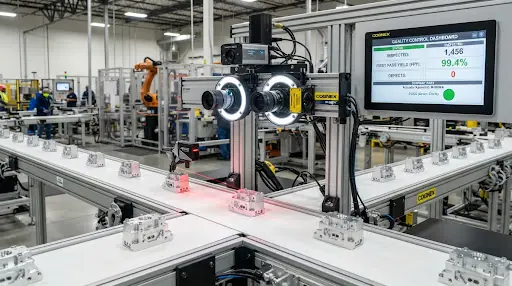 STANDARD 01 • CLAUSE 8.5.2 / 8.7 / 10.2
TWO-CLICK GENEALOGY
The auditor picks a finished unit off the shelf and asks where its material came from, and what happened to the nonconformity that was raised against that batch. In most plants the answer takes two days and three people.
ManuFactoryIQ stores multi-tier genealogy at the moment of production, so a finished serial resolves to its sub-assemblies, component lots, and supplier heat numbers in two clicks.
Nonconformities are not a separate binder. Containment, disposition, root cause, and the corrective action that closed them stay attached to the serials they affected, with the inspection evidence that verified effectiveness.
When a mill test report is missing, the system knows before the auditor does — incoming material without a linked certificate never reaches a production order.
"Every finished unit answers for its own material, and for the correction that was made."
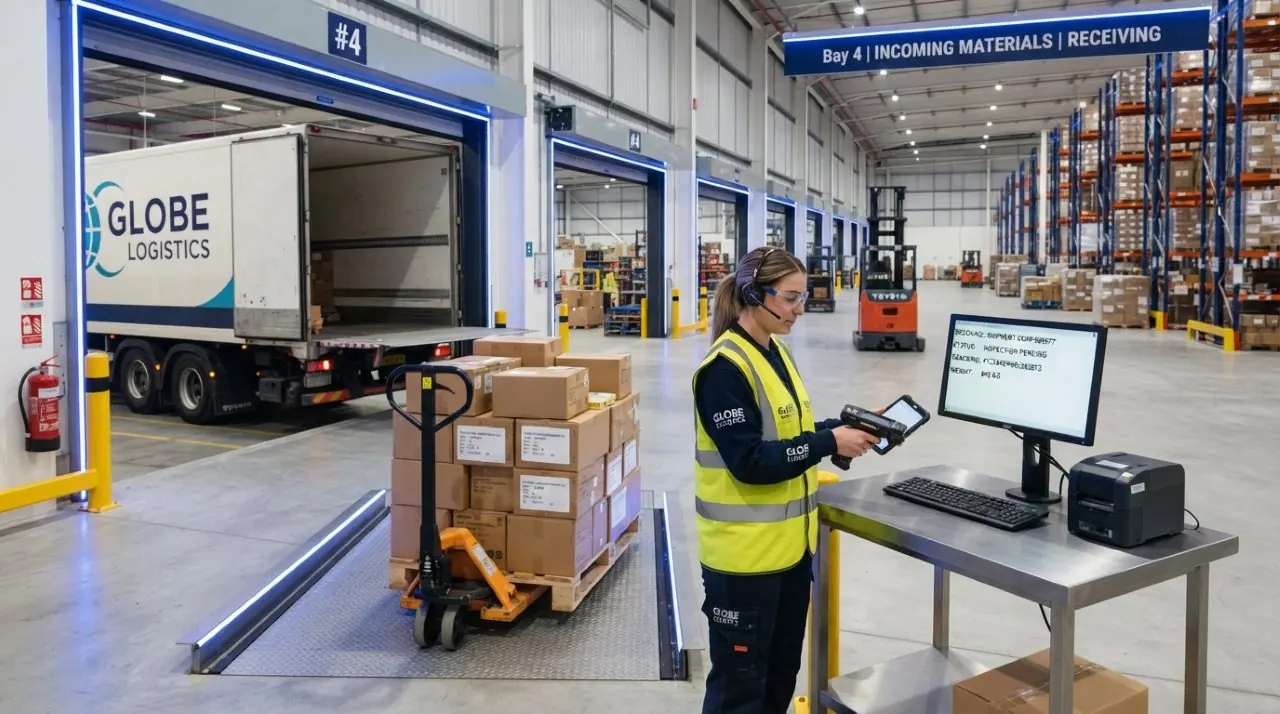 STANDARD 02 • CLAUSE 6.1.2 / 8.1 / 9.1.1
MANIFESTS LINKED
Environmental aspects are usually documented once, during certification, and then diverge from reality. The register says one thing, the disposal invoices say another, and nobody can show performance against the objective without rebuilding it from scratch.
Scrap, solvent use, and waste streams are captured where they are generated — at the machine, in the same transaction that reports production output.
Every licensed pickup is tied to its disposal certificate and to the production orders that produced the material, so a manifest is never an orphan document sitting in a drawer.
Thresholds are monitored continuously rather than reconciled monthly. When a stream approaches its permitted limit, the alert goes to the operations owner, not to an inbox after the fact.
"An environmental objective is only real if today's number is already in the system."
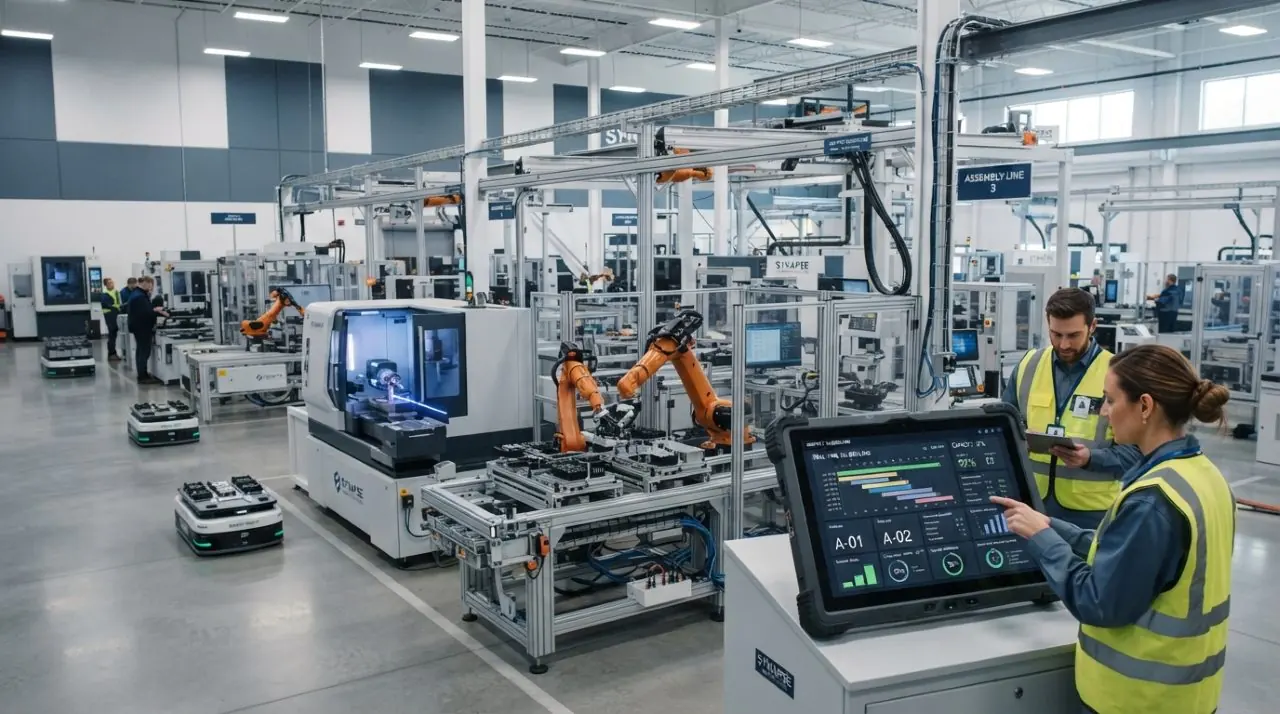 STANDARD 03 • CLAUSE 8.5.2.1 / 8.7.1.7 / 10.2.3
INTERLOCK ACTIVE
Automotive auditors do not accept a procedure that says error-proofing exists. They want evidence that the device was working on the shift in question, and proof of what it did when it caught something.
Poka-yoke checks run at the station, not in a report afterwards. A duplicate serial, a wrong revision, or a skipped operation stops the transaction before it becomes an ERP posting.
Each block is logged with the serial, the operator, the station, and the timestamp, alongside the supervisor override that released it — so the exception record writes itself.
Nonconforming product is segregated by the system rather than by a red tag that somebody has to remember to attach. Contained material cannot be consumed by another order.
"Error-proofing that only exists in the procedure is the finding, not the control."
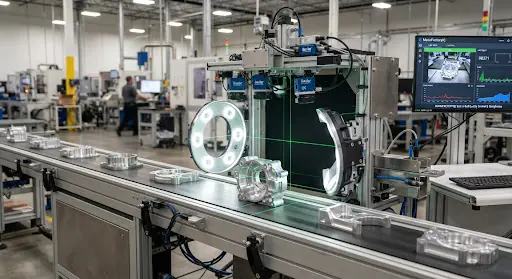
 STANDARD 04 • QUESTIONS P6.2.4 / P6.5.1
Cpk 1.82
A VDA process audit is not a document review. The auditor stands at the machine and asks how the special characteristic is controlled right now, and which gauge produced the number on the screen.
Measurements arrive from the gauge itself, stamped with the equipment, the operator, the calibration date, and the production order they belong to.
Capability is calculated on the live data rather than on a quarterly sample pulled by hand, so Cpk and first-pass yield reflect what the process did this shift.
When a target is missed, the improvement action is opened against the machine with an owner and a due date, and it stays visible until the yield returns to target.
"A characteristic is controlled when the gauge, the operator, and the calibration are on the same record."
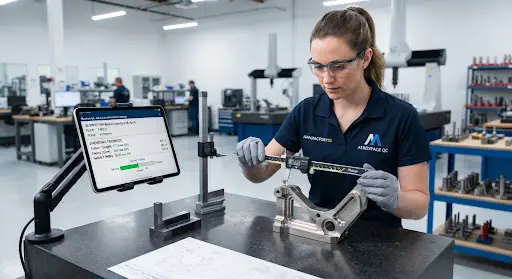
 STANDARD 05 • CLAUSE 8.1.2 / 8.5.2 / 8.6
BASELINE LOCKED
In aerospace the question is rarely whether the part is good. It is whether the part was built to the configuration that was approved, and released only after every required inspection was actually signed.
The revision is locked to the work order at release. A drawing change does not silently propagate into work already in progress, and an operator cannot pull a superseded document.
Key characteristics, first article results, and dimensional sign-offs are collected as inspection gates. The final release is refused while any gate is open, no matter who is asking.
The result is a sealed dossier per serial — configuration, material certificates, inspection evidence, and the named inspector who released it, with the timestamp attached.
"Nothing ships until the configuration and every signature agree with each other."
 STANDARD 06 • §§ 11.10(a) / 11.10(e) / 11.50 / 11.70
TRAIL SEALED
Part 11 is unforgiving about one thing: a corrected value must never erase the original. If the audit trail cannot show what the number was before, the record is not defensible.
Every change keeps the previous value, the new value, the person, the timestamp, and the documented reason — written automatically, not entered by the person making the change.
Electronic signatures carry their meaning: review, approval, or release. The signature is bound to the specific record version, so it cannot be transplanted onto a later revision.
Validation evidence lives with the system. IQ, OQ, and PQ results are retained per release, so a software update does not put the validated state back into question.
"A corrected record has to show its own history, or it is not a record."
ManuFactoryIQ is not a replacement for your document system of record. It is the layer that captures what happened on the floor and hands your existing stack evidence an auditor will accept — without an IT migration.


Book a 45-minute walkthrough with our compliance engineering team. We map your plant topology to the standard you are actually audited against, and show you where the evidence gaps are today.