Traditional ERP systems record inventory quantities and warehouse movements. However, they do not always show why physical inventory differs from system inventory, whether transactions were completed on time, or where work is waiting inside the warehouse.
ManuFactoryIQ manages the complete physical flow of materials—from receiving and storage to production consumption and customer shipment. Barcode-controlled transactions, real-time task management, and intelligent warehouse optimization keep ERP data aligned with actual warehouse operations.
Designed specifically around line-side replenishment, receiving verification, and zero-error warehouse logistics.
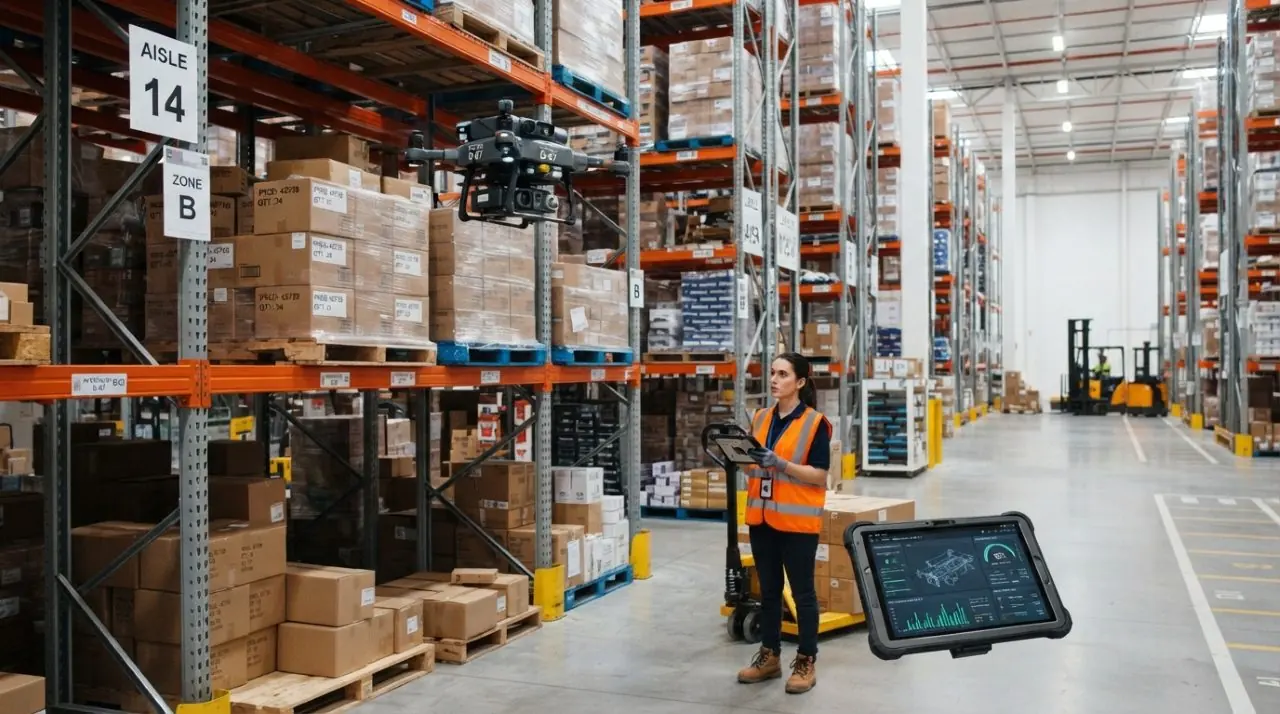
Inventory accuracy cannot be achieved through periodic physical counts alone. A receiving error, material placed in the wrong location, or a delayed production-consumption transaction can gradually create significant inventory discrepancies.
ManuFactoryIQ tracks the exact location of every material by warehouse, zone, rack, bin, and container. It separates available, reserved, quality hold, MRB, damaged, WIP, and obsolete inventory, clearly showing the difference between inventory recorded in the system and inventory that can actually be used.
Cycle counts are scheduled based on inventory value, movement frequency, operational criticality, and previous count discrepancies. High-value, critical, fast-moving, or frequently inaccurate materials can automatically be counted more often.
The system does more than identify inventory variances. It analyzes receiving, transfers, production consumption, incorrect locations, and delayed transactions to help determine where and why the discrepancy occurred.
"Do not just identify inventory discrepancies. See where and why they happened."
Many warehouse inventory problems occur because the physical movement and the ERP transaction do not happen at the same time. Material is moved without completing the transfer, issued to production without recording consumption, or placed in the wrong location.
ManuFactoryIQ uses mobile devices and barcode scanning to record transactions at the moment materials move. The product, location, lot, serial number, and quantity are verified during every transaction. If the wrong material, location, or quantity is selected, the system can warn the user or prevent the transaction from being completed.
During receiving, the purchase order, ASN, packing slip, and physical barcode are compared. Product, quantity, lot, and delivery discrepancies are identified before the material enters available inventory. Based on product and supplier rules, materials can automatically be directed to available inventory, inspection, or quarantine.
Lot number, serial number, supplier, receipt date, and shelf-life information remain connected within a single digital record. FIFO and FEFO are no longer just written procedures—the system directs the picker to the correct location and lot.
During picking, packing, and loading, the order, product, quantity, lot, and shipping label are verified again. This prevents incorrect shipments before they are loaded onto the truck.
"The physical movement and the system transaction happen at the same time—with the same accuracy."
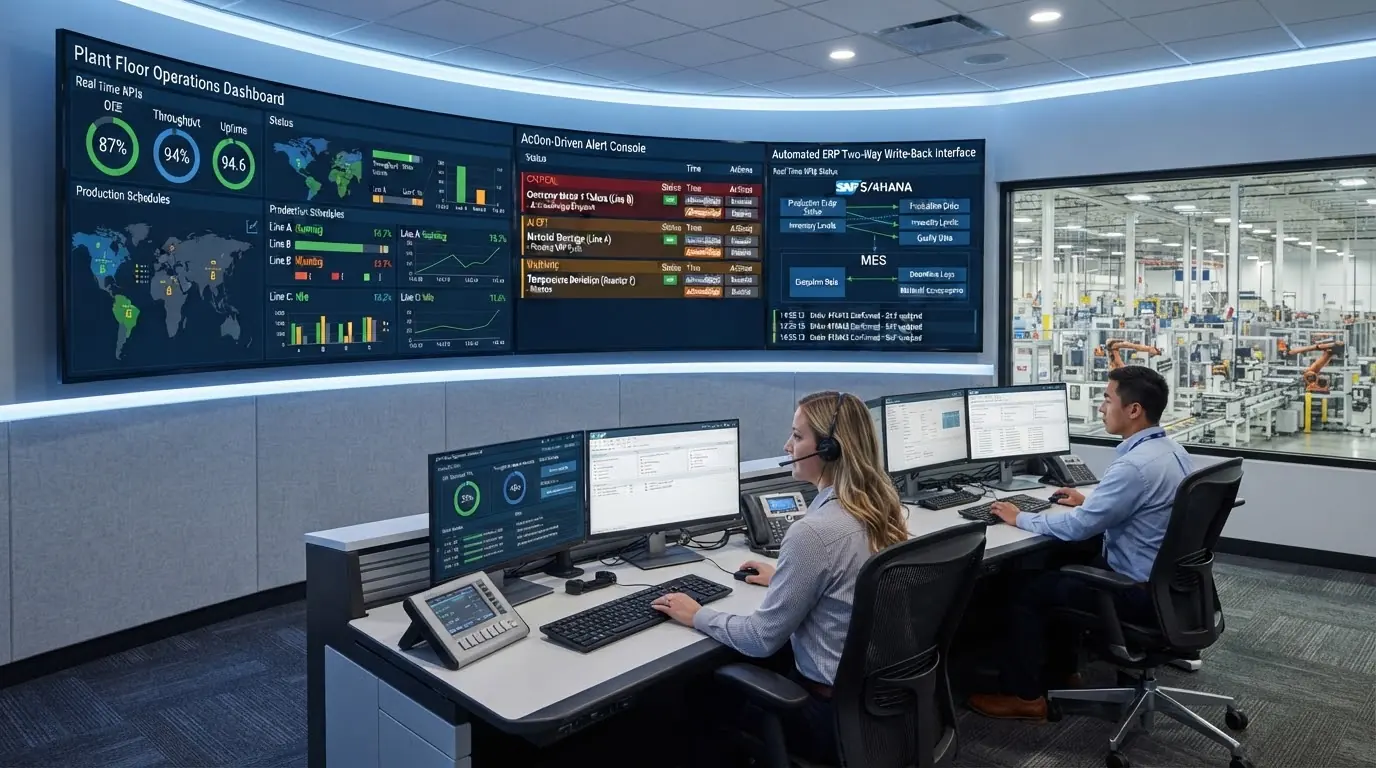
In traditional warehouse operations, tasks may be scattered across different screens, paper lists, emails, and verbal instructions. Managers cannot always see which tasks have started, which are delayed, or where available labor capacity exists.
ManuFactoryIQ converts receiving, inspection, put-away, replenishment, cycle counting, picking, packing, transfers, and loading into digital tasks. Every task is managed with its priority, assigned employee, location, target completion time, and related production or customer order.
Tasks are prioritized based on their operational impact. A replenishment task that could stop production or a picking task connected to an approaching shipment can automatically move ahead of lower-priority work.
Managers can see pending, active, delayed, and completed tasks in real time. They can quickly identify whether the current bottleneck is in receiving, put-away, picking, packing, or loading. Employees can view their next priority directly on a mobile device instead of searching for work or waiting for instructions.
"Do not just monitor warehouse activity. Direct the right task to the right person at the right time."
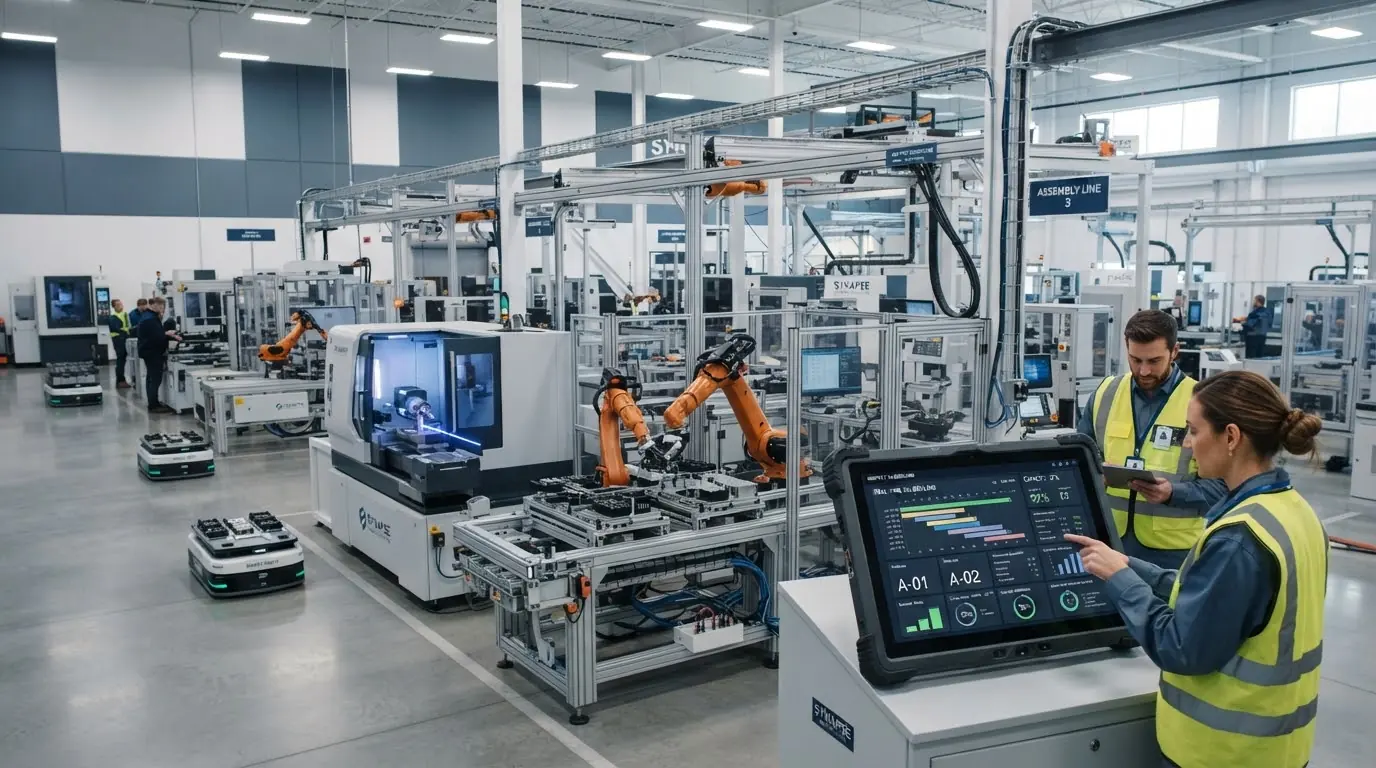
Warehouse performance cannot be improved through speed alone. Incorrect material placement, excessive walking, delayed line-side replenishment, and poor space utilization can slow down the entire operation.
ManuFactoryIQ recommends put-away locations based on product dimensions, weight, movement frequency, point of use, and storage requirements. Fast-moving products can be placed in accessible areas, while materials with special storage requirements are directed to suitable locations.
Picking routes are optimized using product locations, order priorities, and shipment deadlines. Production kits are compared with the BOM and production order so missing components can be identified before picking begins. Line-side and supermarket inventory levels are monitored using actual consumption, allowing replenishment tasks to be created before production requests material.
Location capacity, warehouse utilization, product dimensions, and movement frequency are analyzed together. This reveals unused space, incorrectly positioned products, and warehouse layouts that slow down operations.
Receiving, put-away, replenishment, picking, packing, and loading times are measured to show not only how much work was completed, but also where time was lost.
"Before adding more warehouse space or labor, use your existing resources more intelligently."
Top 20% SKUs relocated to ground-level ergonomic pick faces.
Takt-time triggered auto-dispatch before floor buffer reaches safety limit.
High-bay volumetric placement based on container weight & dimensions.
ManuFactoryIQ does not require you to replace your existing ERP or WMS. It digitizes real warehouse activity and closes the gap between system records and physical operations.
Experience how ManuFactoryIQ layers seamlessly over your ERP to track real-time bin movements, prevent shipping errors, and eliminate warehouse bottlenecks.